How to Provide Specially Designed Instruction: What it is and Why It’s Needed
Walking into a classroom that supports students with disabilities, you’ll notice students with a wide range of abilities and students using many ways to communicate, participate, and access learning.
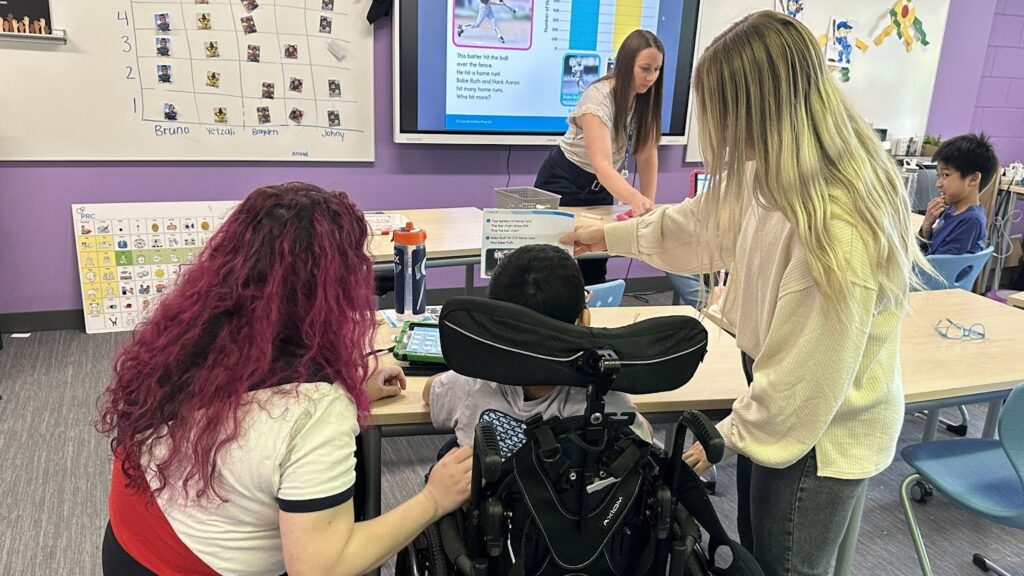
One student might express ideas using a communication device or sign language, while another may use a keyboard or work with a paraprofessional or therapist for written communication. To meet the needs of students with different learning goals and support needs, members of the special education team often work together to provide explicit instruction in classrooms designed to meet diverse needs.
Students in the same classroom usually have different learning goals and require different kinds of support. This wide range of abilities is part of what makes teaching students with significant support needs complex and what drives the need to answer the question of how to provide specially designed instruction, or SDI.
Specially Designed Instruction: The Core of Special Education
Specially designed instruction (SDI) is an individualized teaching approach delivered in a group setting. It’s how teachers adapt what they teach so that every student can meet their IEP goals and make measurable progress. It also creates an environment that embraces all students and fosters high expectations.
In practice, SDI may include:
- Ensuring each student has an effective means of communication
- Using visual and physical supports to clarify learning expectations
- Modifying the classroom environment to remove barriers
- Selecting materials that align with students’ ages and interests.
These supports look different depending on the student, the setting, and the skills being taught.

Examples of How to Provide SDI in K-12 Classrooms
These are some ways SDI can be seen during daily instruction:
- Collaborating with speech-language pathologists, occupational therapists, assistive technology facilitators and instructional technology staff to support augmentative and alternative communication (AAC)
- Breaking down multi-step directions and providing visual supports
- Using explicit, systematic instruction to teach reading, writing, or math concepts
- Modifying a classroom environment with the input from an occupational therapist, physical therapist and teacher of the visually impaired (TVI) to optimize positioning or engagement with learning materials, or to minimize sensory overload.
- Using emergent literacy assessments to identify specific areas of need.
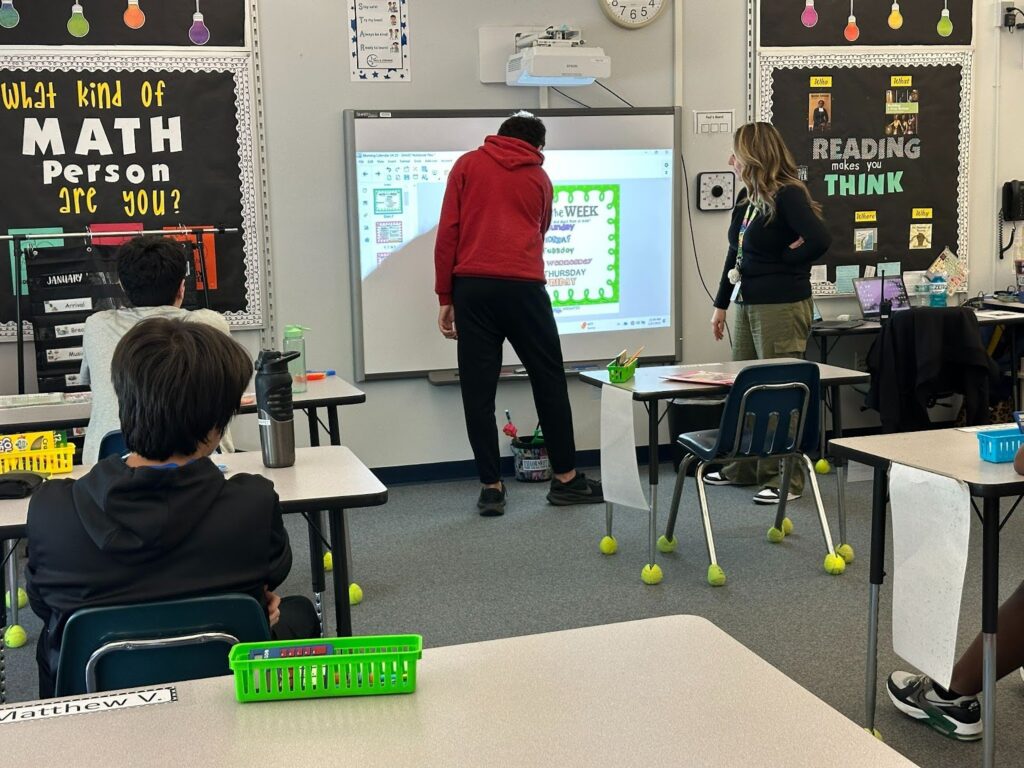
Examples of How to Provide SDI For Literacy Instruction
SDI might include:
- Providing graphic novels written at different levels of complexity that respect the age and interests of the learners.
- Use of assessment tools such as the Emergent Literacy Measures to identify specific needs for each learner.
- Using predictable chart writing, sentence starters, or visual word banks to support writing.
- Embedding literacy instruction across subject areas to build fluency and comprehension.
These practices are more than differentiation. While differentiated instruction adjusts lessons to meet student preferences, specially designed instruction focuses on addressing how each student is taught so they can meet the specific goals outlined in their IEPs.
The Power of Co-Teaching
SDI often happens in classrooms where general education and special education teachers co-teach. In co-taught classrooms, both educators share responsibility for planning and delivering instruction. This could mean leading small groups, modeling strategies, or supporting students during whole-group activities.
For students, co-teaching means that supports and accommodations are built into the flow of daily instruction. Everyone in the room experiences the same support without specific students feeling like they are being singled out for specialized instruction.
In self-contained classrooms, students often benefit from co-teaching delivered by a teacher and a speech-language pathologist for example, to provide additional modeling, support, and feedback.
Designing Classrooms for Diverse Needs
The classroom environment plays an important role in student success. Classroom design removes barriers and anticipates sensory, communication, and physical needs for all students
Examples include:
- Visual supports such as schedules, icons, and anchor charts that help students remember steps and routines
- Noise-reduction strategies like headphones, carpeting, or sound-absorbing panels to minimize distractions
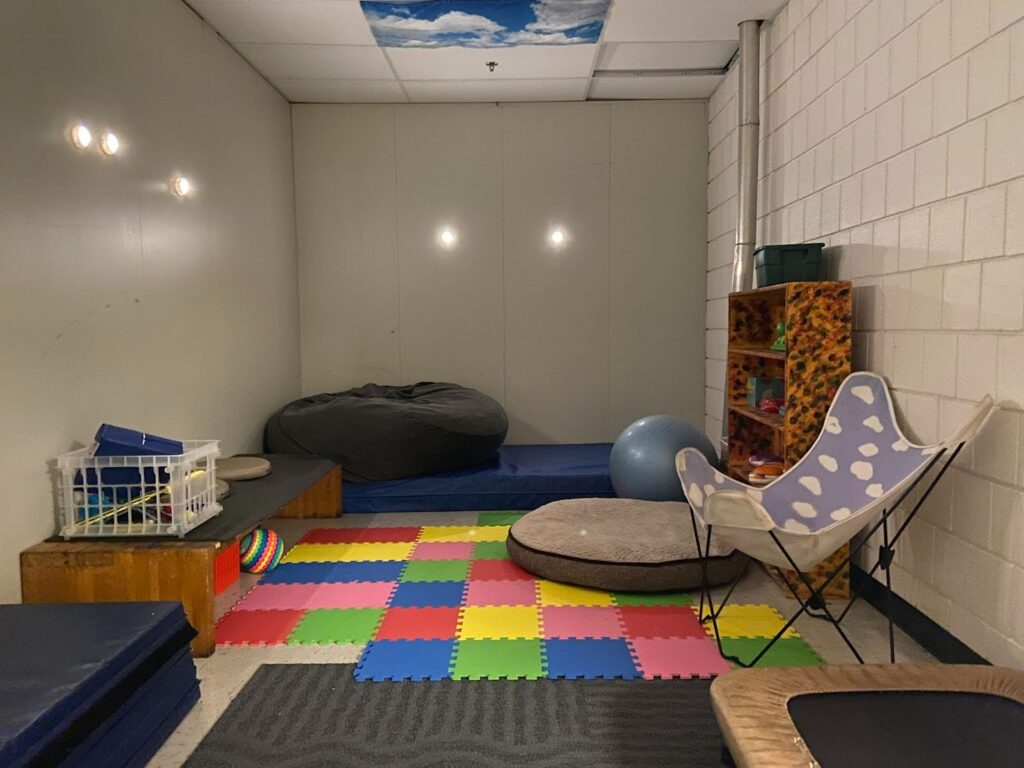
- Quiet spaces that provide areas for self-regulation or sensory breaks
- Meeting sensory needs through the use of seating options, weighted vests or blankets, frequent breaks, fidget or sensory manipulatives like stress ball, or putty. Lighting adjustments such as light filters or lamp lighting may also be beneficial, and some schools opt to create a sensory corner or room, as this example shows.
When classrooms are built with these elements in mind, students who might otherwise struggle are more able to participate, focus, and connect with instruction and peers.
Why Curriculum Frameworks Matter
Consistency supports learning, especially for students with disabilities. Without a shared framework, instructional quality can vary across classrooms. A consistent, research-based curriculum framework helps ensure that all students receive high-quality instruction, while still allowing educators to individualize supports and teaching methods.
This structure provides the predictability many students rely on to thrive, especially those who benefit from instructional routines and familiar formats.
School districts that adopt a shared and consistent curriculum framework reap additional benefits for students and educators. Students don’t have to learn a new instructional format when they move from grade to grade or from one school in a district to another school.
Meeting Students Where They Are
Specially designed instruction is more than a strategy. It offers equitable education for all students, including those with disabilities. When paired with co-teaching educator collaboration, thoughtful classroom design, and a consistent curriculum framework, SDI ensures every student can make measurable gains toward their learning goals.