How to Choose a Special Education Curriculum That Actually Builds Readers
From the Desk of Trisha Johnson
Literacy Education Advocate and President, Building Wings
Quick Answer: What Should You Look For?
If you are evaluating a special education curriculum for reading, focus on these five elements:
- Explicit, systematic phonics instruction that is taught daily
- Full alignment with the Science of Reading
- Built-in access for AAC users and nonspeaking learners
- Opportunities for real reading and writing, not isolated drills
- Evidence of measurable student progress over time
These features matter because students learn to read through direct instruction and meaningful practice, not exposure alone.
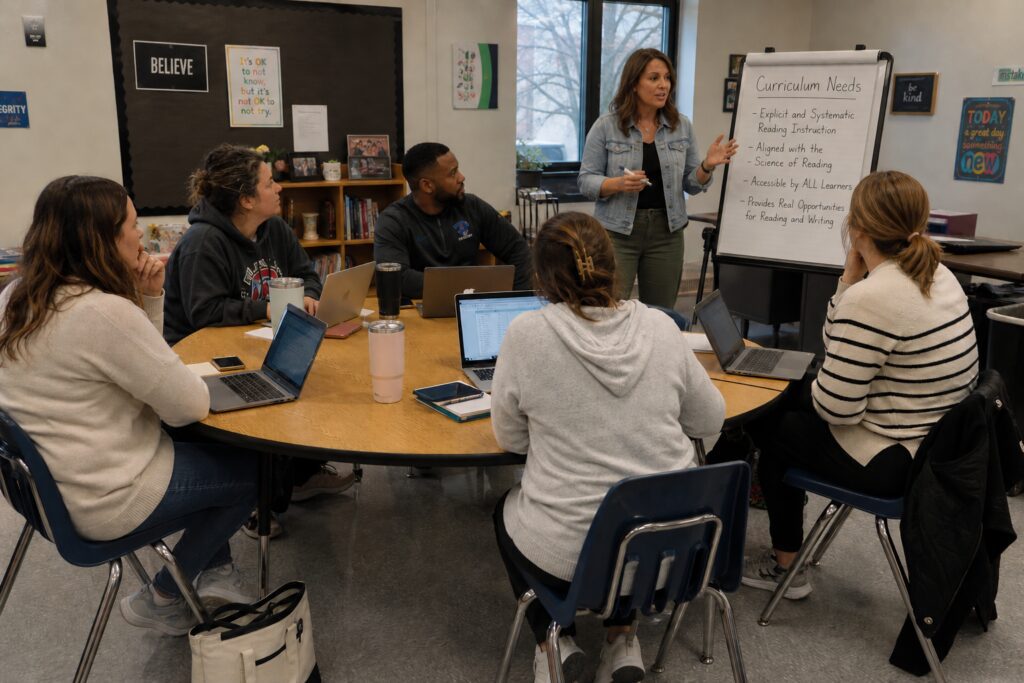
Something feels off.
I hear it in conversations with district leaders, classroom teachers, related services staff, and parents.
Teams are implementing with fidelity.
Schedules are tight.
The program is being followed the way it’s supposed to be.
And still, there’s a quiet question.
Are our students actually learning to read?
Now that’s real tension. And it’s a tension that is growing.
Why This Question is Coming Up Now.
Why Special Education Curriculum Decisions Are Changing
Across the country, expectations are shifting. State literacy laws are increasing.
Districts are being asked to align with the Science of Reading. At the same time, special education teams are being asked to ensure meaningful access for students with a wide range of learning and communication needs.
When those two priorities come together, something becomes clear:
Not every curriculum we’ve relied on was designed to build true literacy.
Some were built for structure.
Some for consistency.
Some for filling the day with activities to keep the students busy.
Some for ease of implementation.
But fewer were designed to answer the question that matters most:
How does this student become a reader?
What to Look For in a Special Education Curriculum for Reading
When I sit down with administrators and educators, the conversation usually shifts pretty quickly. It moves away from features and into outcomes.
Here are the things I always come back to:
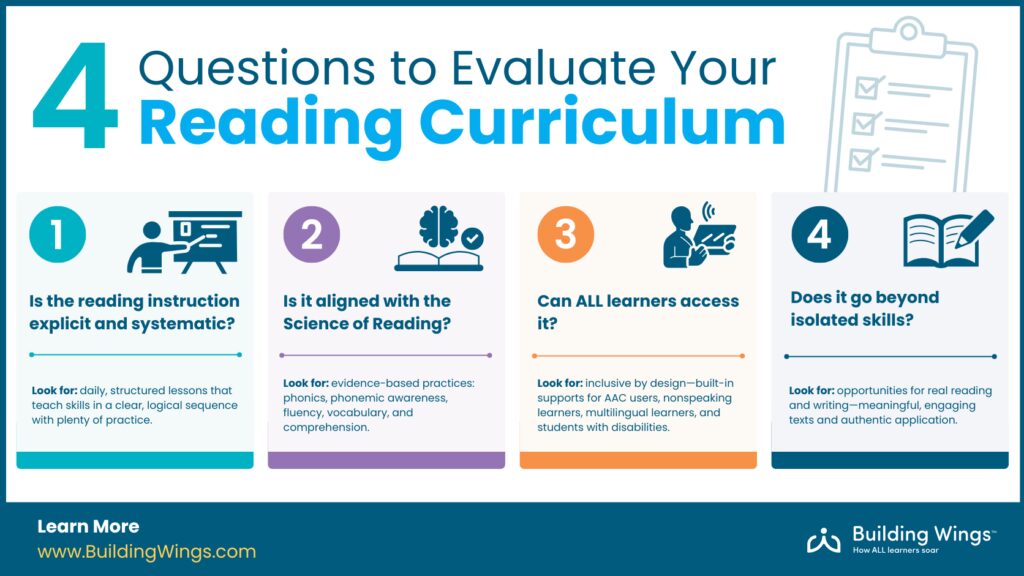
1. Is Reading Instruction Explicit and Systematic?
Being surrounded by words isn’t what teaches students to read, and guessing from symbols alongside text doesn’t get them there either.
They learn to read when they are taught how words work.
That means:
- Explicit phonics instruction
- A clear, intentional sequence
- Daily opportunities to practice decoding
Without the ability to decode unfamiliar words, students can’t truly read on their own.
2. Is It Aligned with the Science of Reading?
We know more now than we did even a decade ago.
A strong special education curriculum should reflect that.
It should include:
- Phonemic awareness
- Phonics and decoding
- Fluency
- Vocabulary and comprehension
Not as separate parts, but as a system that grows and strengthens together over time.
3. Can All Students Access It?
This is where many programs unintentionally fall short.
Not all students communicate verbally.
Not all students learn in the same way.
A curriculum should support:
- Students who use AAC
- Nonspeaking students
- Students with moderate to severe disabilities
And it should provide multiple ways for students to:
- Engage
- Respond
- Demonstrate understanding
Literacy is not dependent on speech. Access matters.
4. Does It Go Beyond Isolated Skills and Give Opportunities for Real Reading and Writing?
Structure can feel reassuring. Predictable. Manageable.
But students need more than isolated practice. They need:
- Meaningful texts
- Opportunities to write
- Chances to connect ideas
- A way to communicate what they know
If that growth isn’t visible, it’s worth pausing and asking why.
When a Curriculum is “Working” but Learners Aren’t Making Progress.
Here’s something I’ve heard over and over again the past few years:
“It’s working…just not in the way we had hoped.”
And I think that’s an honest place to be.
What it usually means is:
- The structure is there
- The system is functioning
- But the outcomes aren’t where we want them to be
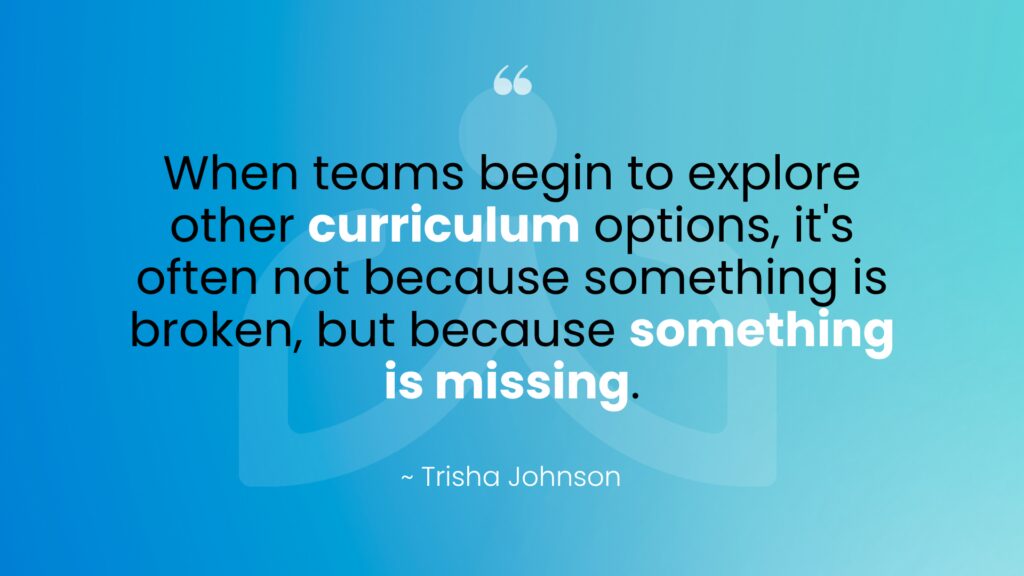
That’s often the moment when teams begin to explore other options. Not because something is broken, but because something is missing.
Making Curriculum Decisions and How to Evaluate Your Current Literacy Approach
Instead of starting with:
“What’s the easiest curriculum to implement?”
Or
“It’s what we’ve been using for years.”
Or
“Our teachers already know it.”
I encourage teams to ask:
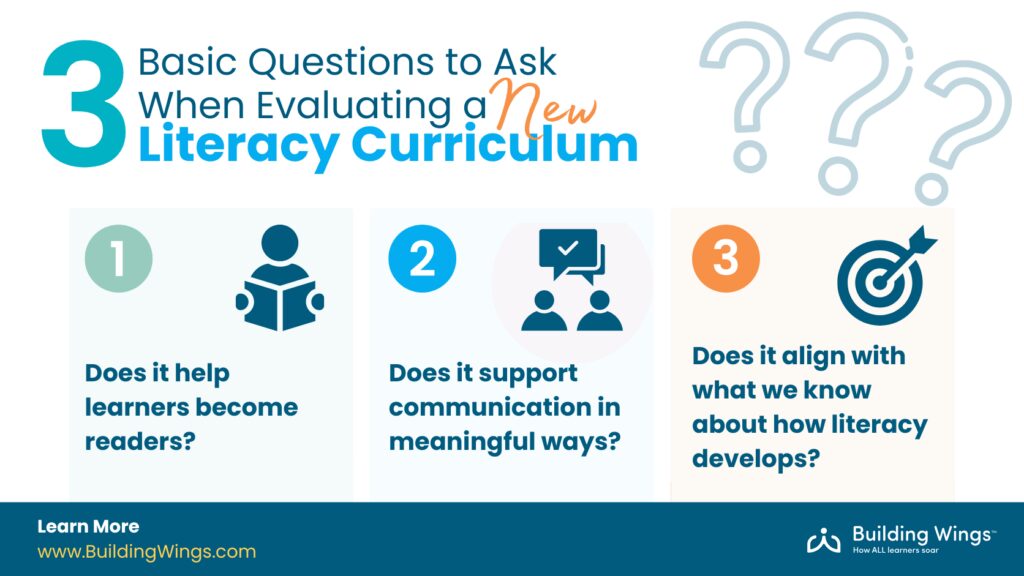
- Does this help students become readers?
- Does this support communication in meaningful ways?
- Does this align with what we know about how literacy develops?
Those questions shift everything.
Where to Start
If your team is beginning to take a closer look at your current approach, a few simple steps can help:
- Spend time in classrooms and look at the actual student work
- Talk with teachers about where they feel supported and where they feel constrained
- Identify which students are not making expected progress and dig into why
From there, it becomes clear whether your current curriculum is meeting your goals or it is time to consider something different.
Frequently Asked Questions
What is the best special education curriculum for reading?
The best curriculum includes explicit phonics instruction, aligns with the Science of Reading, and provides access for students with diverse communication needs.
Can students who use AAC learn to read?
Yes. Research shows that students who use AAC can develop strong literacy skills when given explicit instruction and meaningful opportunities to engage with text.
What does “aligned with the Science of Reading” mean?
It means the curriculum teaches phonemic awareness, phonics, fluency, vocabulary, and comprehension in a structured, evidence-based way.
Why isn’t my current curriculum producing results?
Some programs focus on structure and consistency but lack explicit reading instruction or accessibility. This can limit student progress.
How do I know if a curriculum is accessible?
Look for multiple ways for students to participate, including supports for AAC users, visual responses, and adapted materials.
A Final Thought
There is no perfect curriculum.
But there are curricula that are better aligned with what we know now and better designed to support the students we serve.
The goal isn’t ease.
It isn’t compliance.
It’s literacy.
Because when students are truly becoming readers, you don’t question if it’s working.
You can see it in their independence.
You can experience it in their communication.
You can feel it in the classroom.
And that’s the outcome worth building toward.
Author Bio: Trisha Johnson
For the last 25 years, I have served in a leadership role at two companies with a mission to help all learners, including those with complex learning barriers, soar with the right tools and educational materials. I am currently the president of Building Wings, a company founded by Don Johnston that provides special educators with instructional learning materials for learners of all ages, and I was the vice president of Don Johnston, Inc., a company that offered AT tools for learners with dyslexia and dysgraphia. I am, and have been, a vocal advocate for assistive technology in the work I do, in the presentations I’ve given, and on social media. I have established relationships with educators, administrators, service providers, and organizations across the U.S., which give me insight into the educational and policy needs to increase awareness, acceptance, and value of AT for individuals of all ages in many settings. I am also an adult with learning disabilities who knows firsthand how it feels. I also went through a school system that didn’t support my disabilities. I made it to college on a Tennis scholarship and succeeded academically while there.