


Skip links

Blog

How Controlled Chaos Can Cost You:
Using Systematic Instruction For Literacy Learning

Walk into a classroom during a literacy block, and you’ll often see a lot happening at the same time. Students might be working with letter tiles, participating in a read aloud, and engaging with writing using an AAC. Teachers move from student to student offering support, adjusting instruction, and encouraging participation.

It can look busy and energetic—maybe even a little chaotic. 

But strong literacy instruction involves much more than “looking busy.” What matters most is that the instruction is clear, intentional, and consistent enough for students to build skills over time.

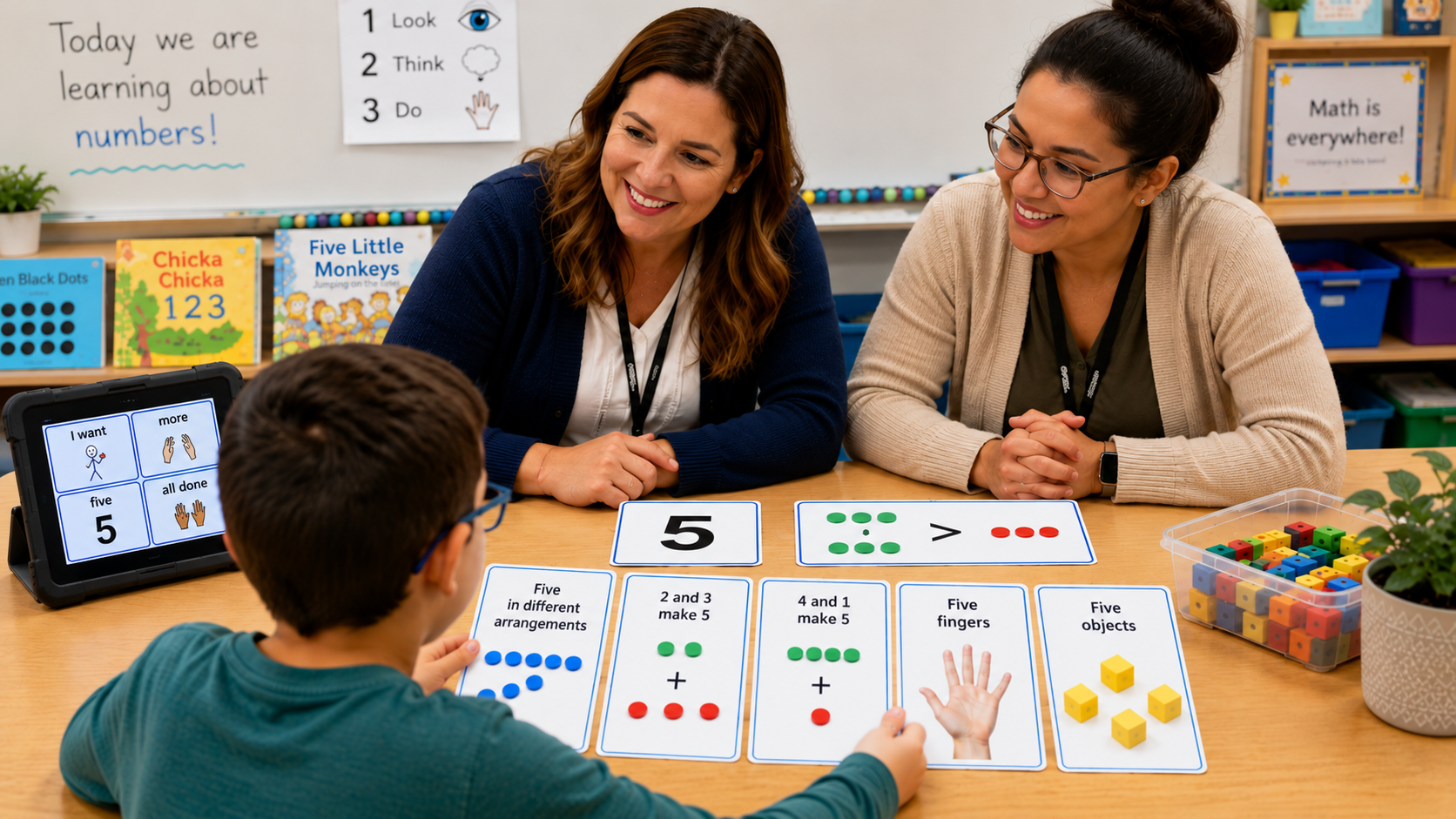
Two teachers guide a young student using systematic instruction.

For students with significant cognitive disabilities in particular, consistency is what makes learning possible. When instruction follows predictable routines, builds systematically, and provides repeated opportunities for practice, students begin to understand what learning looks like and how they can participate. 

When instruction looks very different from classroom to classroom, that clarity becomes harder to maintain.

Why Consistency Matters in Literacy Instruction

Students thrive when instruction is both responsive and predictable. The Institute of Education Sciences highlights that literacy instruction should be explicit, systematic, and build cumulatively to support student literacy outcomes, especially for students who need more intensive support. 

Within that shared structure, there is plenty of room for the teacher’s voice. Educators bring creativity, experience, and unique teaching styles to their classrooms, and that diversity is a wonderful strength. 

Strong literacy instruction is built on both teacher expertise and shared routines that support students across classrooms.

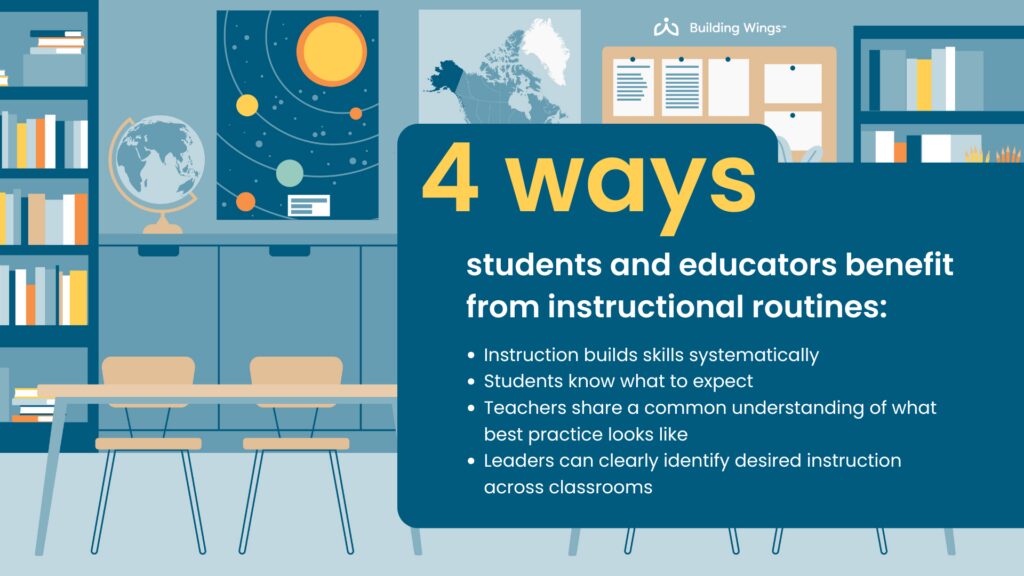
When those shared structures are in place, students and educators benefit because: 

  • Instruction builds skill systematically 
  • Students know what to expect during literacy learning 
  • Teachers share a common understanding and language of what best practice looks like 
  • Leaders can clearly name and see what good instruction looks like across classrooms 

For students who rely on structured instruction, repetition, and accessible communication supports, that predictability is especially important. 

When literacy routines change dramatically from classroom to classroom, students may be distracted by the need to relearn the structure of instruction rather than focusing on developing their literacy skills. Consistency creates the conditions for learning to accumulate over time.

An animated classroom with a text portion describing four ways students and educators benefit from instructional routines

Supporting Teachers with Clear Instructional Structures

When schools don’t have shared instructional routines or aligned curriculum, teachers often carry the responsibility of building those systems themselves. 

That means they are constantly deciding:

  • What to prioritize during literacy instruction 
  • How to scaffold learning for different students 
  • How to modify materials for accessibility 
  • How to assess progress 

Teachers are skilled problem-solvers, but when every classroom is building its own system, that mental load adds up quickly.  Clear instructional structures help reduce that burden. 

Aligning routines, expectations, and materials across classrooms gives teachers more time to focus on responsive teaching, observation, and building relationships with their students. Rather than designing systems, they can be fully immersed in the instruction itself.

Helping Leaders See Instruction Clearly

Consistency also helps school leaders better understand what is happening across classrooms. During walkthroughs, leaders may notice student engagement or busy activity, but determining whether instruction is systematic, accessible, and aligned with school goals can be more nuanced. Shared expectations make instruction more visible. 

With shared expectations, leaders can look beyond activity and consider whether students are receiving explicit literacy instruction, have meaningful opportunities to practice and respond, have access to communication supports, and experience predictable instructional routines across classrooms.

When instruction is aligned across classrooms, leaders are better able to support teachers, identify patterns, and make informed decisions about instruction and professional learning.

Building Literacy Systems That Support Every Learner

Consistency creates a shared foundation that supports both educators and students while still leaving space for teacher expertise and responsiveness. 

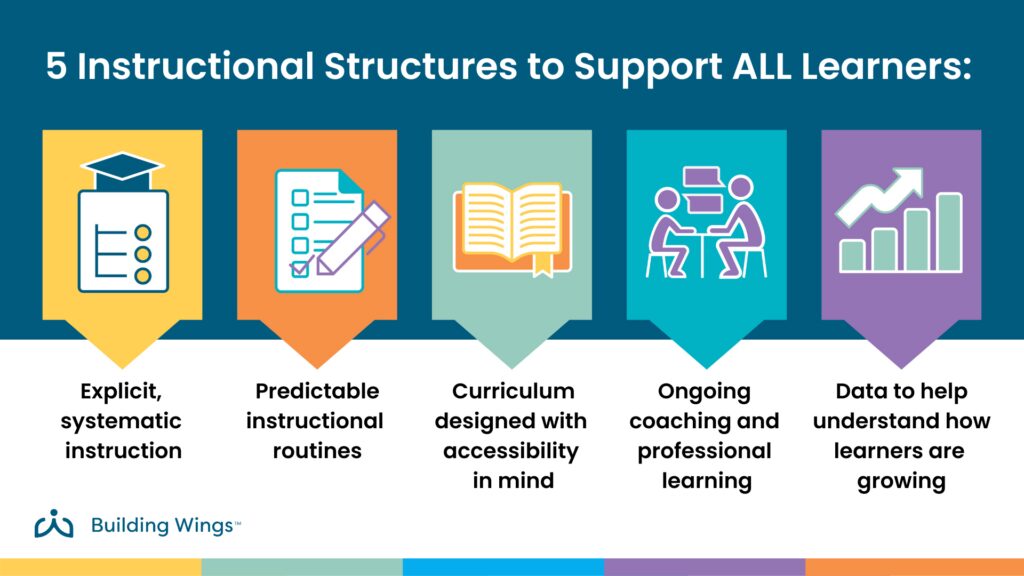
Strong literacy systems often include:

  • Explicit, systematic instruction 
  • Predictable instructional routines 
  • Curriculum designed with accessibility in mind 
  • Ongoing coaching and professional learning
  • Data that helps educators understand how students are growing

Within that structure, teachers bring their creativity, their responsiveness, and their knowledge of their students to deliver instruction that is engaging, coherent, and systematic. In many classrooms, this can look like a teacher pausing mid-lesson to quickly adjust materials or reteach a concept. It’s work that happens constantly, but often goes unseen.

A colorful graphic describing the five instructional structures that support all learners.

Consistency Supports Literacy

For students with disabilities, literacy instruction is most effective when it’s intentional, structured, and consistent.

Blue Background Quote Reads: "For students with disabilities, literacy instruction is most effective when it’s intentional, structured, and consistent."

Classrooms that are aligned across expectations and routines enable students to experience instruction that builds over time rather than starting over each year or in each new classroom. Consistency helps ensure that access to literacy instruction does not depend on the classroom a student is placed in. Using systematic instruction and evidence-based routines, schools create conditions for literacy learning to grow consistently across classrooms and over time.

Share:

Secret Link

Karen A. Erickson, Ph.D.​

Karen A. Erickson, Ph.D. is Director of the Center for Literacy and Disability Studies at University of North Carolina—Chapel Hill. Her focus is on understanding the best ways to assess and teach reading and writing to children with the most severe disabilities. As a special education teacher, Dr. Erickson has worked to support students with a range of disabilities in a variety of classroom settings, particularly students who do not use speech as their primary means of communication.

Website: https://www.med.unc.edu/ahs/clds

Author Profile: https://products.brookespublishing.com/cw_Contributorinfo.aspx?ContribID=110&Name=Karen+Erickson,Ph.D.

Try Readtopia for free

TRY FIRST AUTHOR FOR FREE!