My First Year as an Instructional Specialist: Building a Special Education Literacy Community
From the Desk of Sara Gokey
Instructional Specialist: Bloomington Public Schools
This was my first year outside the classroom and my first year working as an instructional specialist. In this role, I support teachers in center-based special education classrooms.
I knew immediately that I wanted to lead a literacy book study using Comprehensive Literacy for All: Teaching Students with Significant Disabilities to Read and Write by David Koppenhaver and Karen Erickson.
The book is an essential resource for educators looking for practical ways to provide comprehensive literacy instruction to students with significant disabilities. It helps educators understand how to teach reading and writing to learners who may not access instruction in conventional ways.
I attended Literacy Camps led by the authors in 2015 and 2017, so I already knew the book could provide an incredible foundation for educators supporting students with complex learning needs. This would be my third time reading it from cover to cover, though I have referenced it frequently since it was published in 2020.
What I did not fully anticipate was how much the book study would shape my first year as an instructional specialist or how deeply it would connect educators across our district.
Bringing Educators Together Around Comprehensive Literacy
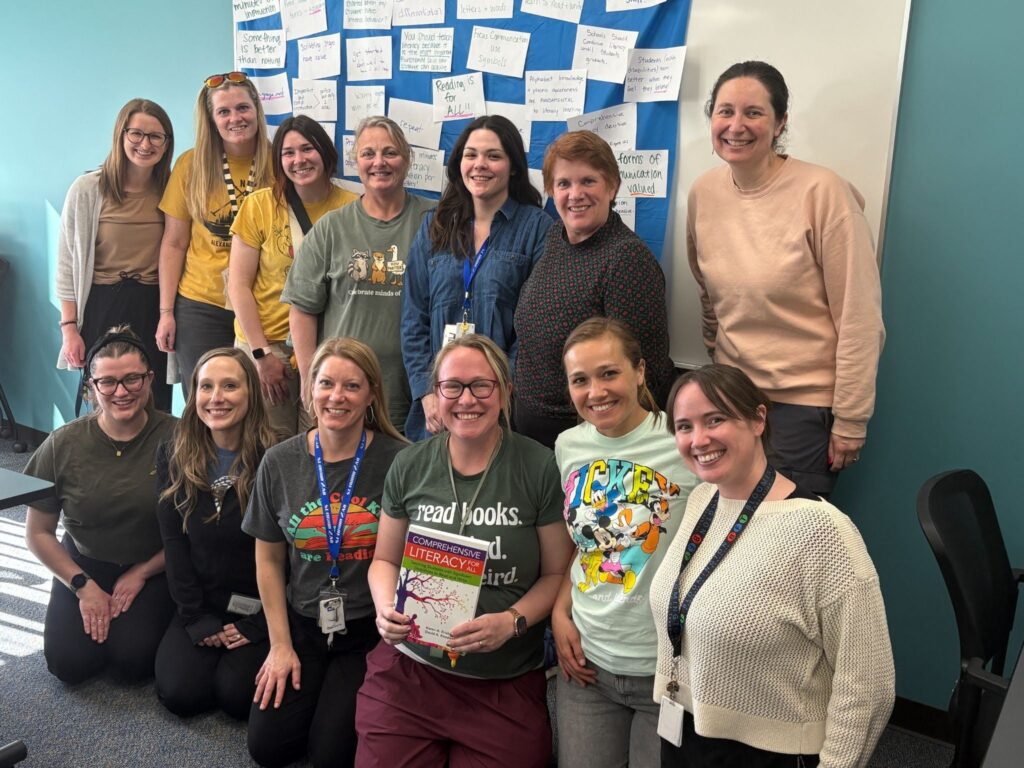
During workshop week, I led several trainings and shared a Google Form to gauge interest in the book study. I was surprised and thrilled when about 30 teachers and related service providers signed up.
I also reached out to early childhood teachers who had begun using ReadtopiaGO the previous year to ask if they wanted to participate.
Because of scheduling needs, I facilitated two separate book studies. One met virtually after school and included elementary and secondary educators. The other met in person before school and included early childhood educators.
Each format offered something valuable.
The in-person book study made it easier for participants to engage, hear every voice, and continue conversations before and after each meeting. The virtual format allowed educators from more than 10 schools to participate without traveling. It took some creativity to make sure everyone had an opportunity to contribute, but it made the group accessible to educators with incredibly busy schedules.
I remember setting the first meeting dates in October and feeling anxious because I was not yet sure how I would facilitate the conversations. The first two times I read the book, my forever mentor and Literacy Camp partner, Kathy Bailey, led the studies.
Then, just one week before my first session, Building Wings released its official Comprehensive Literacy for All Book Study Guide.
I could not believe my luck.
The guide immediately eased my anxiety and helped me feel more confident leading the discussions. I used its questions and facilitation strategies during every session.
Exploring Assistive Technology and Access
One discussion that continues to stand out came from Chapter 11:
“How do you currently make decisions about assistive technology in your classroom? Are those decisions clearly connected to your instructional goals and student needs?”
Our conversation about the “stoplight strategy” was especially engaging because many educators had never encountered the concept before. One speech-language pathologist connected deeply with the idea that we should not pair a difficult, or “red,” activity with a difficult, or “red,” access tool.
That conversation helped us think differently about assistive technology. The question was not simply, “Does this student have a tool?” We also needed to ask whether that tool provided effective access to the specific learning task.
What Does "All Means All" Look Like in Literacy Instruction?
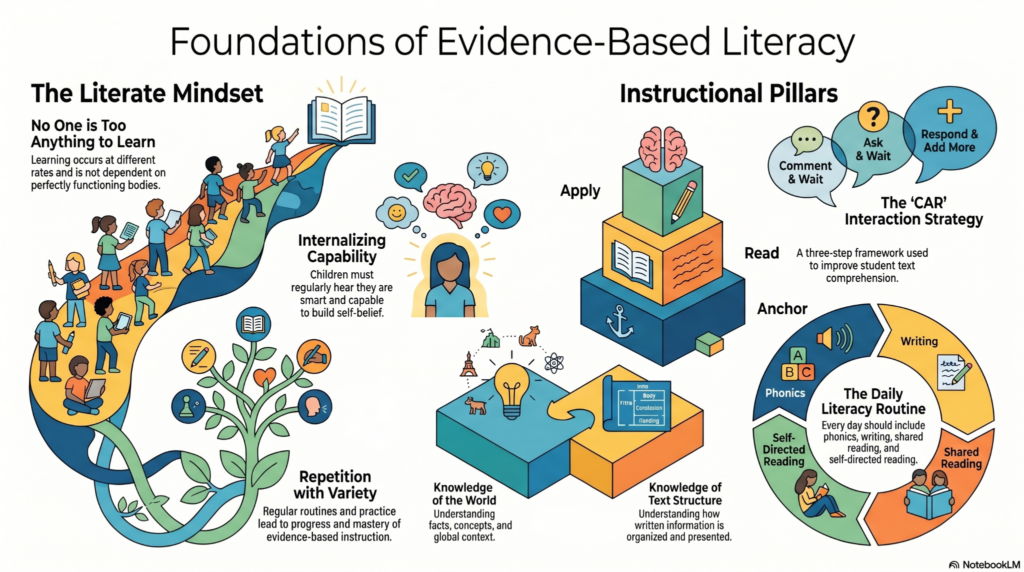
One of my biggest takeaways from leading this book study was realizing how many educators believe that “all means all” right alongside me.
“All means all” means there are no prerequisites for learning.
We do not wait for a student to prove they are ready to read, write, communicate, or do math. We assume they are capable right now. It is our responsibility to provide the access tools, assistive technology, adapted materials, and high-quality instruction they need.
As Karen reminds us, if a student has a heartbeat, that student has the right to high-quality instruction.
We do not search for gaps within the student. We look for gaps in the environment, instruction, and supports surrounding that student.
That belief closely reflects the Building Wings mission to help all students reach new heights in their learning. It also became the foundation of the literacy community we created together.
Moving From a Book Study to a Community of Practice
By the end of our time together, I felt that every participant had become a “knowledgeable other” whom the rest of us could turn to for support with literacy instruction.
Teachers were excited to show me evidence of strategies they had tried because of our discussions. They shared student writing samples, described changes they had made to instruction, and celebrated signs of student progress.
As I supported teachers during the school day, I sometimes took pictures of these strategies in action to share at our next meeting. We eventually started calling the group “Book Club” because it sounded more fun and better reflected the community we were creating.
The experience was no longer limited to reading and discussing a professional text. Teachers were applying what they learned, observing student responses, bringing questions back to the group, and learning from one another.
Connecting ReadtopiaGO, Student Interests, and Play
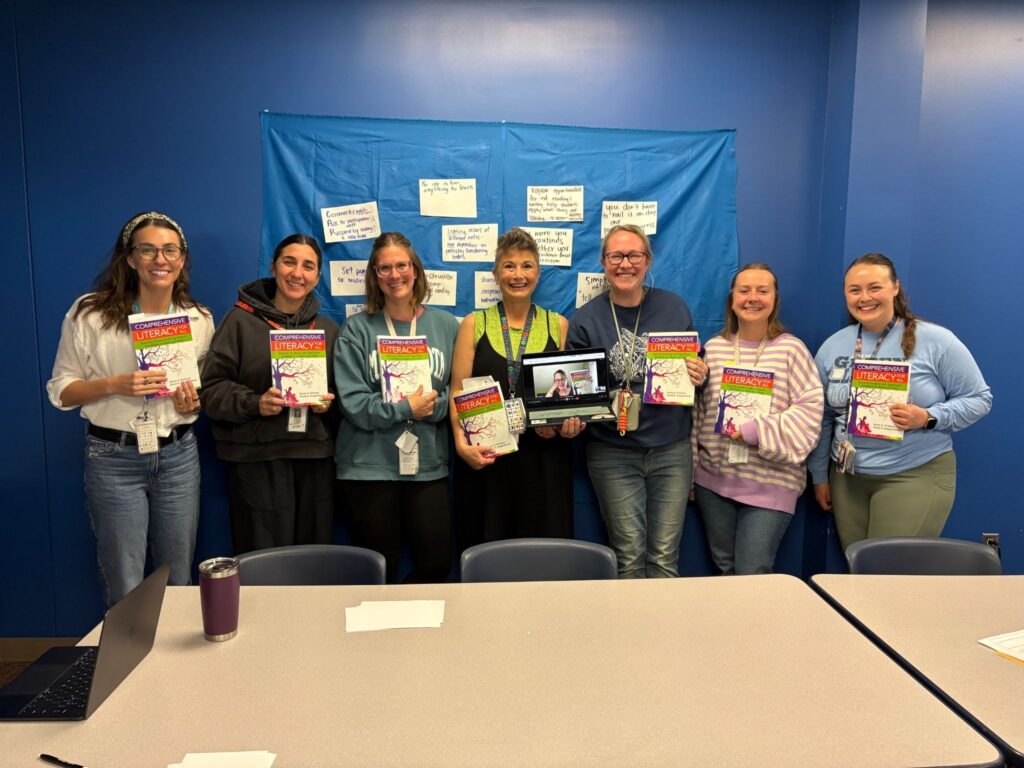
About halfway through the year, Maureen Donnelly, Director of Curriculum at Building Wings, joined our in-person early childhood book club virtually. The educators in this group were relatively new to both the book and the ReadtopiaGO curriculum.
I invited Maureen to help answer some of their questions. The session became a conversation I still reference when supporting teachers.
One teacher shared that engaging students with ReadtopiaGO sometimes felt more difficult than using familiar “big book” titles such as Brown Bear, Brown Bear, What Do You See?
Maureen emphasized how important it is to follow students’ interests. If an animal unit in ReadtopiaGO captures their attention, stay with that unit. Then bring in related books, such as Brown Bear or Dear Zoo, to extend the learning.
She also discussed the importance of play in early literacy and language development. That is why so much intentional planning goes into the play-based learning centers and instructional routines within ReadtopiaGO.
After Maureen left, the teachers expressed an overwhelming sense of relief. They needed to hear that play was not something they had to move past to begin “real” instruction. Supporting play throughout the day was not only acceptable; it was encouraged.
Maureen also shared something that felt deeply validating: If you read only three pages before the class disperses from the group, those three pages can still represent meaningful success.
That reminder mattered. Success does not always look like completing an entire lesson exactly as planned. Sometimes success is three pages of genuine attention, communication, connection, and joy.
Supporting Teachers Without Selling to Them
My Q-Comp coach, a growth-focused peer partner, happened to observe that session.
During our post-observation conversation, she shared that she never would have known Maureen worked for a curriculum company. Maureen was there to support teachers and strengthen instruction, not to sell a product.
That felt noticeably different from many educators’ experiences with curriculum companies.
The interaction showed what it can look like when curriculum support begins with listening to teachers, honoring their expertise, and helping them make instruction work for the students in front of them.
Becoming a More Intentional Facilitator
Toward the end of the school year, I attended a Technology of Participation Facilitation Methods training. The experience gave me additional tools for leading conversations, conducting trainings, and facilitating book studies.
One of the most important lessons I learned was to limit how much I talk and create more space for participants to drive the discussion.
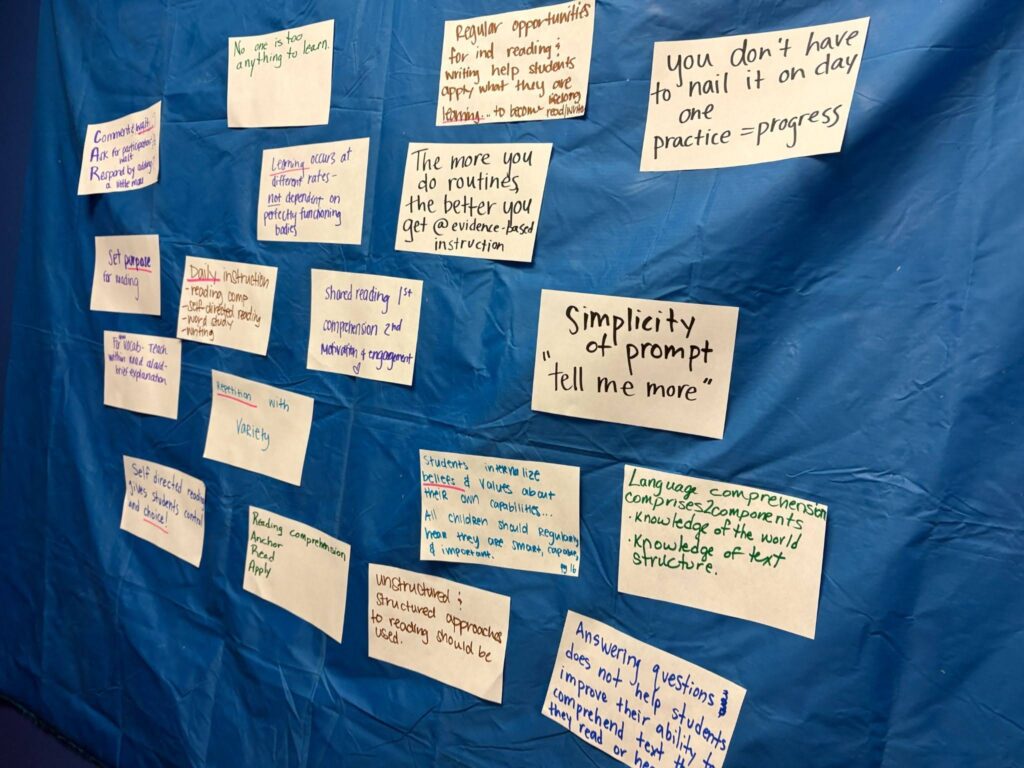
I tried some of these new strategies during our final sessions. I asked the educators to review the book and their notes, then identify the ideas, quotes, and takeaways that mattered most to them.
Seeing all those reflections collected in one place was incredibly empowering. We ended the year with a hopeful vision for literacy instruction and a beautiful sense of the community we had built together.
What I Learned During My First Year as an Instructional Specialist
This book study taught me that structured resources, collaborative learning, and intentional facilitation can transform how educators approach literacy instruction for students with significant disabilities.
One of my favorite parts of the experience was connecting educators who are usually siloed in separate buildings. Together, we created a space where we could learn as a collective.
Our learning moved far beyond the pages of the book. The facilitator guide helped us have deeper conversations about vocabulary instruction, assistive technology, student engagement, play, writing, and access. Educators then carried those conversations into their classrooms.
The experience also helped me better understand where teachers are in their literacy instruction journeys. It provided the bridge we needed after participating in Minnesota READ Act training the previous year. We had a place to discuss what we had learned, ask questions, and explore how that learning aligned with the work of David Koppenhaver and Karen Erickson.
Now, I am thinking about what these book studies could become next year. Should I keep the current groups separate? Should I bring everyone together? Should we begin a new group so more educators can participate?
We did not quite finish the book in either group, but I do not see that as a failure.
We built a community. We changed instruction. We saw student growth. And I think everyone is excited to keep going.
Frequently Asked Questions
What is a literacy professional learning community?
A literacy professional learning community (PLC) is a group of educators who meet regularly to improve literacy instruction through shared learning, collaboration, reflection, and problem-solving. These communities often focus on evidence-based practices and student outcomes.
Why are book studies effective professional development for special educators?
Book studies create opportunities for ongoing reflection and discussion. Unlike one-time training sessions, they allow educators to apply new ideas in their classrooms, share results, and learn from colleagues over time.
What is Comprehensive Literacy for All about?
Comprehensive Literacy for All by David Koppenhaver and Karen Erickson provides practical guidance for teaching reading and writing to students with significant disabilities. The book emphasizes access, presuming competence, and providing meaningful literacy opportunities for all learners.
How can instructional specialists support literacy instruction?
Instructional specialists can support literacy instruction by facilitating professional learning, coaching teachers, modeling instructional practices, sharing resources, and creating opportunities for collaboration among educators.
What role does assistive technology play in literacy instruction?
Assistive technology helps students access reading, writing, communication, and learning activities. Effective use of assistive technology removes barriers and allows students to participate more fully in literacy experiences.
Why is play important in literacy development?
Play supports language development, communication, social interaction, and early literacy skills. Play-based learning provides meaningful contexts for vocabulary development, storytelling, comprehension, and engagement.
What does “all means all” mean in special education?
“All means all” reflects the belief that every student deserves access to high-quality instruction regardless of disability. It rejects the idea that students must demonstrate readiness before receiving meaningful opportunities to learn.
Author Bio: Sara Gokey
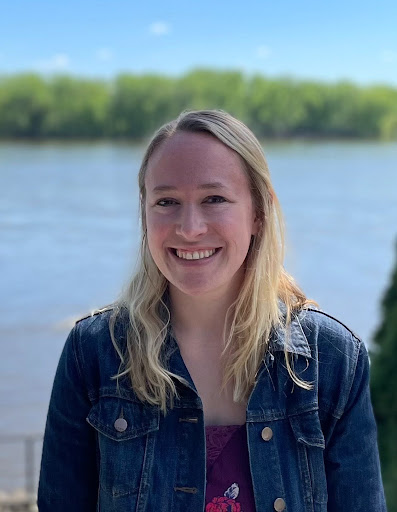
Sara Gokey is an Instructional Specialist with Bloomington Public Schools in Minnesota. She is passionate about advancing comprehensive literacy, communication access and neuro-affirming instruction for students with significant disabilities.